
- Floret Team
- June 24, 2026
 12 minutes
Plant Care Tips Every Plant Lover Needs to Know
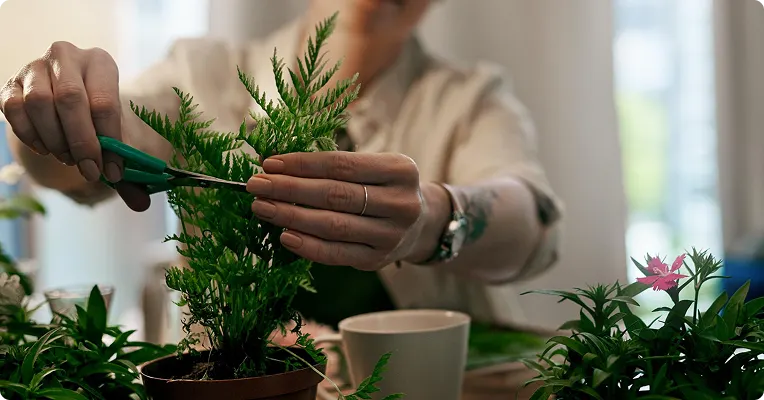
A Money Plant or Pothos can tolerate the occasional missed watering, while a Fern needs consistent moisture to stay healthy. Giving both the same care routine, which happens often in Indian homes where plants sit side by side on a balcony, is one of the most common reasons they struggle. Successful plant care isn’t about memorizing rules or sticking to a fixed schedule. It’s about observing your plant, its leaves, growth, and soil and responding to what it’s telling you.
A Money Plant or Pothos can tolerate the occasional missed watering, while a Fern needs consistent moisture to stay healthy. Giving both the same care routine, which happens often in Indian homes where plants sit side by side on a balcony, is one of the most common reasons they struggle. Successful plant care isn’t about memorising rules or sticking to a fixed schedule. It’s about observing your plant, its leaves, growth, and soil and responding to what it’s telling you.
Understanding What Your Plant Actually Needs
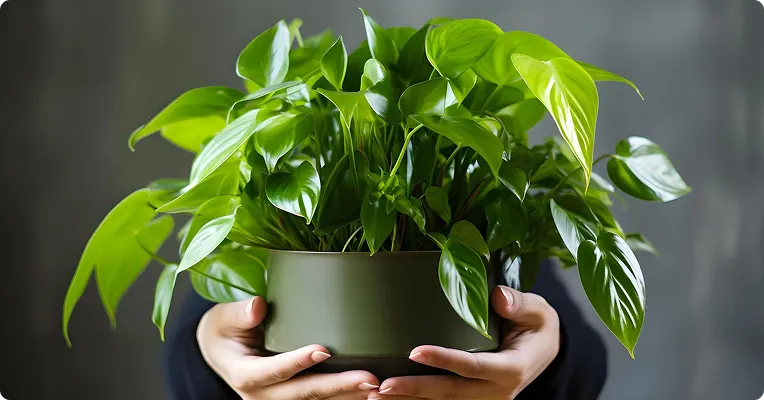
Every thriving plant is the result of a balanced environment rather than a single good habit. While species differ in their preferences, all plants depend on the same six fundamentals. Understanding these gives you a foundation for better decisions instead of guesswork.
Table Of Content
- Understanding What Your Plant Actually Needs
- Mastering Watering – The Most Common Mistake
- How Much Light Do Indoor and Outdoor Plants Need?
- Choosing the Right Soil and Potting Mix
- Fertilising for Healthy Growth
- Managing Pests and Diseases Before They Spread
- Seasonal Care for Indian Homes
- Common Plant Care Mistakes to Avoid
- Frequently Asked Questions
Keep your plants green with trusted gardening services.
The 6 Basics of Plant Health
- Water is essential, but more isn't always better. Healthy roots need a balance of moisture and oxygen. Consistently wet soil can be just as damaging as completely dry soil. The right amount depends on species, pot size, season, and light levels.
- Light fuels photosynthesis, giving plants the energy they need to grow. Some houseplants thrive in bright indirect light; others need direct sunshine. Understanding the light conditions in your home is just as important as choosing the right plant.
- Soil A quality potting mix does far more than hold a plant upright. It stores moisture, delivers nutrients, and allows enough airflow for healthy root development. The right soil can often solve problems that more watering or fertilising cannot.
- Fertiliser Container plants gradually use up the nutrients in their potting mix. A balanced fertiliser replenishes these, supporting stronger roots, healthier foliage, and more vigorous growth during the active growing season.
- Temperature and Humidity Most indoor plants prefer stable temperatures and moderate humidity. Sudden changes from air conditioners running through a Pune or Mumbai summer, ceiling fans on full blast, or harsh afternoon sun through a west-facing window create stress. Tropical species like Peace Lilies and Monsteras appreciate higher humidity, which most Indian monsoon seasons naturally provide.
- Pot Selection and Repotting The right pot provides adequate drainage without retaining excess moisture. An oversized pot may seem like a good idea, but it keeps soil wet for longer and increases the risk of root rot.
Learning to Read Your Plant
As time passes, one of the most valuable skills a plant parent develops is recognising early signs of stress. Plants communicate through their leaves, stems, and roots. Noticing these signals early prevents small issues from becoming permanent damage.
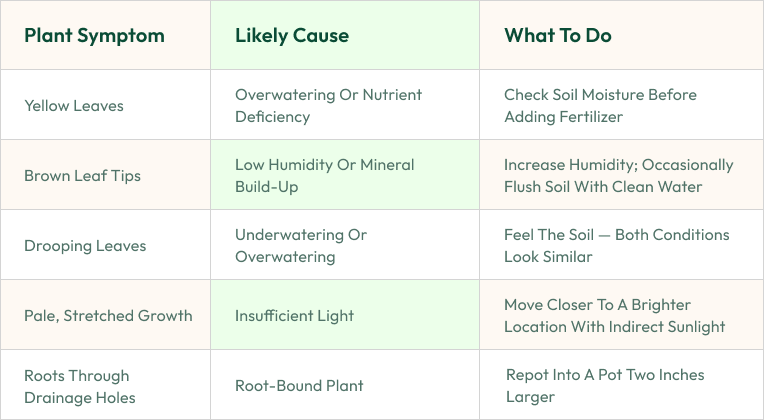
Instead of asking “What schedule should I follow?” you’ll naturally start asking “What is my plant telling me today?” That shift in mindset is often what separates thriving plants from struggling ones.
Mastering Watering - The Most Common Mistake
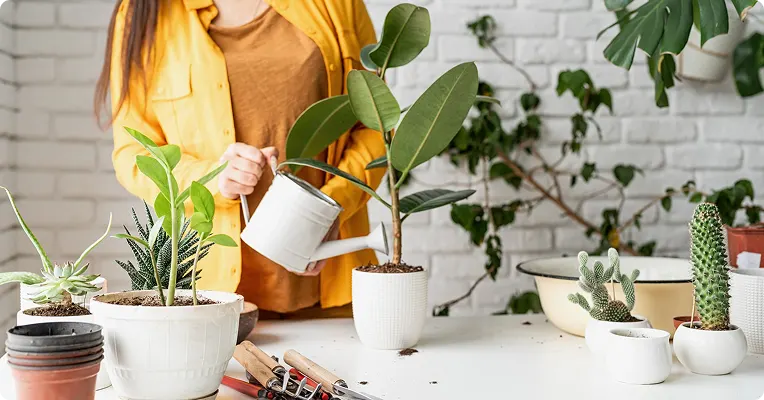
Overwatering causes far more damage than underwatering. Plants don’t need water on a fixed schedule; they need it when the soil around their roots has dried to the right level.
That’s why experienced gardeners recommend checking the soil, not the calendar. Weather, humidity, sunlight, pot size, and potting mix all affect how quickly soil dries. An Areca Palm may need watering every few days in summer, while a Snake Plant in the same home can go over a week without it.
The finger test
Insert your finger one to two inches into the potting mix. If it feels dry at that depth, it’s time to water. If it still feels cool and moist, wait another day or two. Be careful not to confuse surface dryness with root-zone dryness. The top layer often dries much faster than the soil around the roots. Watering because the surface looks dry can leave the lower pot constantly saturated.
Watering technique
Watering technique matters too. Deep watering encourages roots to grow downward, creating stronger plants. Shallow, frequent watering keeps roots near the surface and makes plants more vulnerable to heat stress.
Always use pots with drainage holes. Without them, excess water pools around roots, cutting off oxygen and creating ideal conditions for root rot.
Watering Requirements for Popular Houseplants
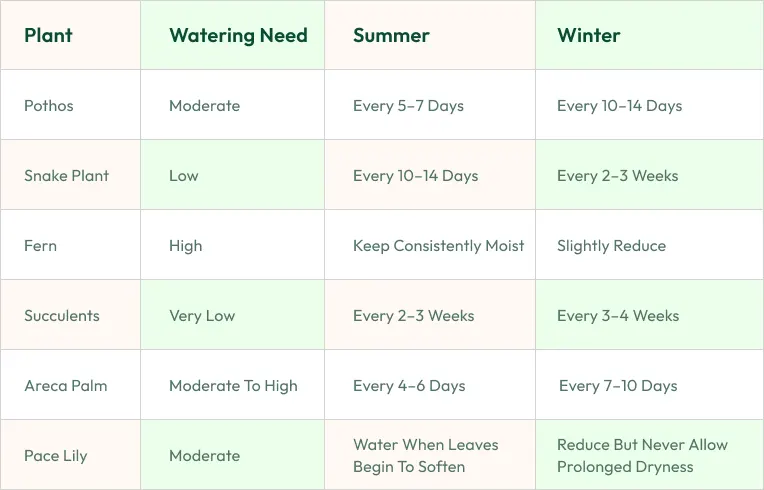
These are starting points, not rules. Always check the soil before watering.
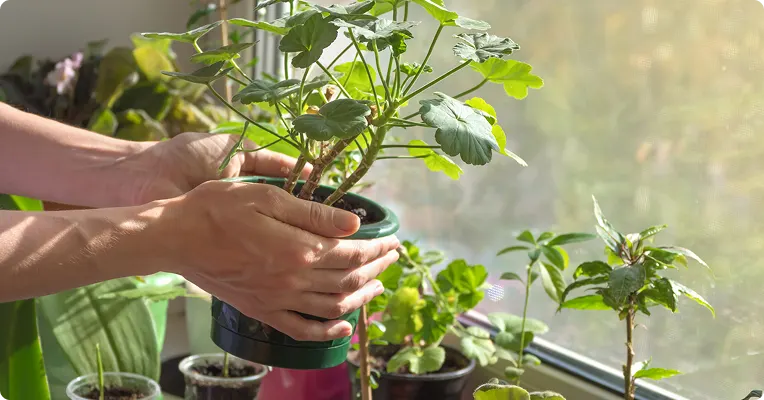
How Much Light Do Indoor and Outdoor Plants Need?
Choosing the Right Soil and Potting Mix
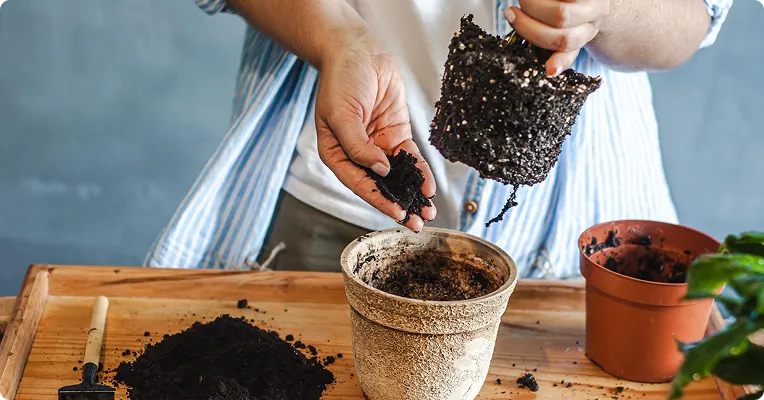
Healthy roots begin with the right growing medium. The soil you choose determines how well your plant retains moisture, absorbs nutrients, and builds a strong root system. Even consistent watering cannot compensate for a potting mix that doesn’t suit the plant growing in it.
A common mistake is using garden soil in containers. It compacts over time, restricts airflow, retains too much moisture, and makes drainage difficult, all conditions that encourage root rot and fungal disease.
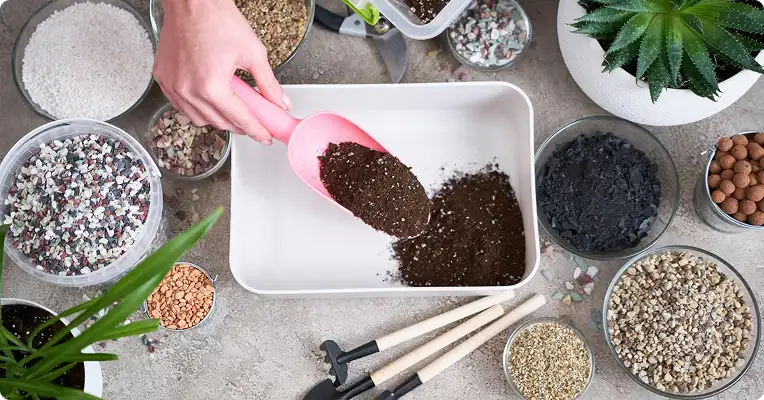
A well-balanced potting mix is designed for container gardening. It stays light, drains efficiently, and holds just the right amount of moisture. Floret offers premium potting mixes and gardening essentials selected to support healthy root growth and long-term plant health.
Matching the mix to the plant:
- Foliage plants (Pothos, Money Plant, ZZ Plant): Coco peat, perlite, and compost in a 2:1:1 ratio, moisture retention with good aeration. This mix also works well for Tulsi, which is found in most Indian homes and thrives in well-draining containers
- Succulents and cacti: Sandy soil with perlite, fast drainage, no moisture retention
- Aroids (Pothos, Monstera): Airy mix with orchid bark or pumice, mimics their natural habitat
- Flowering plants (Jasmine, Hibiscus, Ixora): Nutrient-rich mix with compost and slow-release fertilizer, essential for Indian garden favourites that bloom through summer
When to Repot
Repot when you notice roots growing through the drainage holes, water running straight through without being absorbed, or growth stalling despite good care.
Choose a pot only two inches larger than the current one. Oversized containers hold excess moisture and put young roots at risk. Repotting is also a good time to upgrade your planter; Floret’s product range includes functional designs suited for both indoor and outdoor spaces.
For most parts of India, late February to early March, just before Holi and the onset of summer, is ideal for repotting. Plants are entering their active growing phase and are establishing new roots more quickly in the warming soil temperatures.
Fertilizing for Healthy Growth
Plants need more than water and light to flourish. As they grow, they consume the nutrients in their potting mix, and container plants can’t replenish these naturally. Regular fertilizing keeps them strong.
The three primary nutrients on fertilizer labels are Nitrogen (N), Phosphorus (P), and Potassium (K) — NPK.
- Nitrogen promotes lush foliage and stem growth
- Phosphorus supports root development, flowering, and fruiting
- Potassium improves disease resistance and stress tolerance
Organic vs. Chemical Fertilizers
Organic fertilizers, vermicompost (widely available across Indian nurseries), compost tea, banana peel fertilizer (made from the peels most Indian kitchens produce daily), and cow dung manure, improve soil health and release nutrients gradually. Chemical fertilizers act faster but should always be diluted. Many experienced gardeners use both: organic for regular maintenance, liquid fertilizer during peak growth.
Seasonal fertilising calendar for India
- March to September: Feed every 3–4 weeks during active growth
- October to November: Reduce frequency as growth slows
- December to January: Pause fertilising — plants aren't actively using nutrients
Managing Pests and Diseases Before They Spread
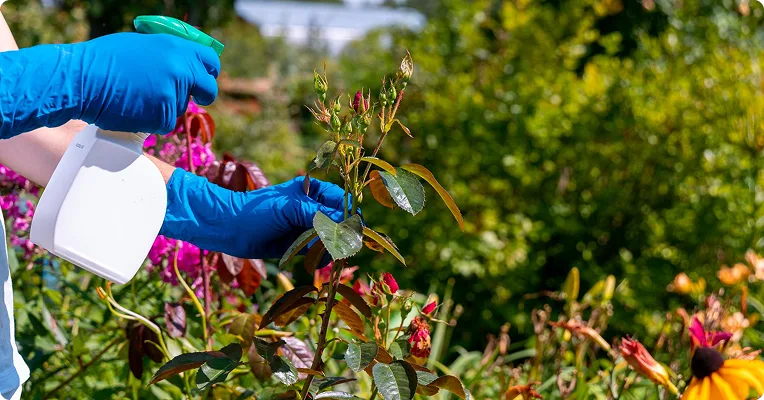
Most common pests are easy to control when caught early. A weekly inspection — especially under leaves, at stem joints, and on new growth — often prevents small infestations from becoming serious.
Common pests to watch for
- Fungus gnats — thrive in wet soil, often signal overwatering
- Spider mites — fine webbing and yellow speckles on leaves
- Mealybugs — white cotton-like clusters at stem joints
- Scale insects — small brown bumps on branches
- Aphids — cluster on new growth, feed on tender leaves
Neem Oil - The All-Purpose Solution
Neem oil spray is a traditional Indian solution that works against most common pests while being completely safe for regular use. Cold-pressed neem oil is readily available at Indian nurseries, pharmacies, and online. Mix 2 ml neem oil, 1 ml mild liquid soap, and 1 litre of water. Spray in the evening or early morning, never in direct afternoon sun, which risks leaf burn. During monsoon months, a preventive spray every two weeks keeps outbreaks in check.
For larger residential gardens, commercial landscapes, or offices, professional plant maintenance ensures problems are identified and treated early.
Common diseases
- Root rot — dark, soft, smelly roots from overwatering; repot into fresh mix after removing damaged roots
- Powdery mildew— white coating on leaves in humid conditions; improve airflow and treat with diluted baking soda
- Leaf spot — dark patches that enlarge over time; remove infected leaves and avoid overhead watering
Seasonal Care for Indian Homes
Summer (March to June)
Growth is rapid — plants need more frequent watering and regular feeding. In cities like Pune, Mumbai, Delhi, and Bengaluru, summer temperatures can push above 40°C, making morning watering essential to prevent heat stress. Watch plants near west-facing windows; afternoon sun through glass can scorch even heat-tolerant foliage. Morning misting with a spray bottle helps tropical plants maintain humidity.
Monsoon (July to September)
Higher humidity means less frequent watering. Outdoor plants need protection from prolonged rain — waterlogged soil encourages fungal disease. Inspect leaves more frequently for pest outbreaks, which are more common in humid conditions.
Winter (October to February)
Common Plant Care Mistakes to Avoid
- Watering on a fixed schedule instead of checking soil moisture
- Using decorative pots without drainage holes
- Repotting into containers that are too large
- Fertilising during winter dormancy
- Placing every plant in the brightest spot regardless of its habitat
- Overwatering out of guilt after a missed watering day — most plants recover faster from dry soil than from wet roots
Complete landscaping and maintenance for commercial and residential spaces.
Conclusion
The habit of observing your plants every few days — whether they’re on your apartment balcony in Mumbai, a terrace garden in Delhi, or a windowsill in Pune — is more valuable than any rigid care routine.
Healthy plants aren’t the result of luck; they’re the result of understanding what each plant needs. Whether you’re bringing home your first indoor plant or building a larger green space, landscaping, plant maintenance, and nursery solutions from Floret are here to help you grow with confidence.
Explore Floret’s gardening services to bring your vision to life.
Frequently Asked Questions
How often should I water my indoor plants?
Most indoor plants in India need watering every 5–7 days in summer and every 10–14 days in winter. Always check the top two inches of soil first rather than following a fixed schedule.
Why are my plant leaves turning yellow?
Usually overwatering, poor drainage, or nutrient deficiency. Check the soil before making any changes to your care routine.
What is the best fertilizer for indoor plants?
A balanced NPK fertilizer like 10-10-10 works well during the active growing season. Organic options like vermicompost and compost tea are excellent for long-term plant health.
How can I get rid of pests naturally?
Neem oil is one of the most effective natural solutions for mealybugs, spider mites, fungus gnats, and aphids. Regular inspection and early treatment matter as much as the spray itself.
When should I repot my plants?
Late February to early March — when plants are entering their active growing phase and establish new roots more quickly.
What soil is best for indoor plants?
A well-draining mix of coco peat, perlite, and compost. Avoid heavy garden soil in containers — it compacts and restricts healthy root growth.
Let’s Grow Something Beautiful Together
Get in touch with us for customized plant solutions and expert care.