
Office Landscaping Guide: Low- Maintenance Plants for Commercial Spaces
- Floret Team
- October 13, 2026
 16 minutes
Table Of Content
- Office Landscaping Guide
- What Office Landscaping Includes
- What Makes a Plant Suitable for Office Landscaping?
- 10 Best Low-Maintenance Plants for Commercial Spaces
- Quick Comparison of Low-Maintenance Office Plants
- How to Choose Office Plants for Different Commercial Spaces
- How to Maintain Office Plants with Minimal Effort
- Who Maintains the Plants? Three Models Compared
- What Does Office Plant Maintenance Cost in India?
- Common Office Landscaping Mistakes to Avoid
- Conclusion: Plan an Office Landscape That Is Easy to Maintain
- Frequently Asked Questions
Keep your plants green with trusted gardening services.
Office landscaping is a practical way to bring greenery into commercial spaces while creating a more welcoming environment for employees, clients, and visitors. From reception areas and meeting rooms to workstations and office corridors, the right plants can complement the interior design without taking up too much space or requiring constant attention.
However, choosing plants for an office involves more than finding varieties that look good. Indoor lighting, air conditioning, watering requirements, available floor space, and maintenance schedules all affect how well plants grow in a commercial environment.
For businesses in Pune and Mumbai planning to introduce greenery, low-maintenance office plants offer a practical starting point.
This guide covers what office landscaping includes, the best plants for different commercial spaces, how to choose and maintain them, and what professional services cost in India.
Why Office Landscaping Matters for Businesses in Pune and Mumbai
Research consistently shows that employees in offices with natural elements are more productive and report lower stress. A Human Spaces study of 7,600 workers across 16 countries found that green offices improved productivity by 6% and creativity by 15%. In India specifically, indoor plants and green office environments were more strongly linked to performance than in many other markets.
For offices in Mumbai and Pune, the case is stronger than in most cities. Urban density, limited outdoor green space during the working day, and year-round air conditioning mean that employees have less access to natural elements than workers in less dense environments. A thoughtfully planned office landscape addresses that gap.
Beyond productivity, office landscaping shapes how clients and visitors perceive a business before a conversation even starts. Entrance areas, reception spaces, and meeting rooms with well-maintained plants create a noticeably different first impression. The productivity research behind commercial landscaping services for offices consistently shows measurable gains in employee focus and retention in Indian urban workplaces.
What Office Landscaping Includes
Office landscaping includes planning greenery for different areas, selecting suitable plants and planters, and setting up a maintenance routine to keep everything in good condition.
- Indoor spaces: Plants for reception areas, desks, meeting rooms, pantries, and corridors.
- Outdoor spaces: Greenery for office entrances, courtyards, terraces, and the edges of parking areas.
- Planters and setup: Choosing suitable planters, stands, lighting, and watering systems based on the space and plant requirements.
- Ongoing maintenance: Regular watering, pruning, pest control, and plant replacement when needed.
What Makes a Plant Suitable for Office Landscaping?
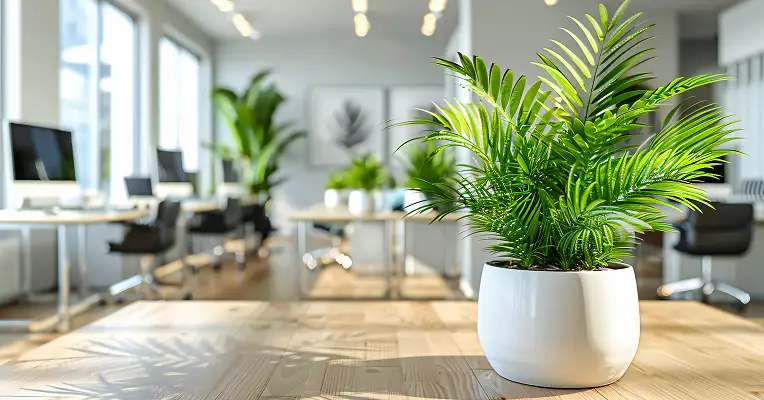
Here are the main factors to consider when choosing plants for commercial spaces.
Low Watering and Pruning Requirements
Suitable Indoor Lighting
Before choosing plants, check how much natural light reaches each area throughout the day. Offices without windows may require grow lights, because ordinary ceiling lighting is not enough to sustain most indoor plants in low-light spaces over the long term.
Appropriate Size and Growth Habit
Manageable Care Requirements
10 Best Low-Maintenance Indoor Plants for Office Spaces in India
The best office plants combine manageable care requirements with a size and appearance that suit the workspace. The following options can work well in commercial interiors in India when their lighting, watering, and space requirements are met.
1. Snake Plant (Dracaena trifasciata)
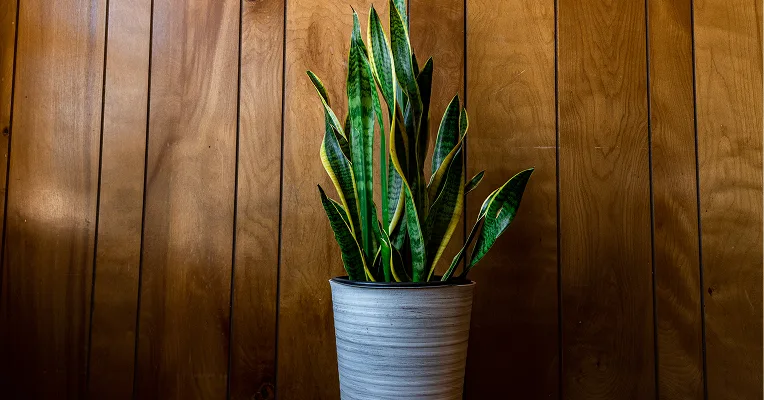
Snake plants are a popular choice for office landscaping because of their upright leaves, compact growth habit, and ability to tolerate periods of dry soil. Their vertical shape works particularly well in offices where floor space is limited.
Care requirements:
- Light: Tolerates low to bright indirect light.
- Watering: Allow the soil to dry thoroughly between waterings.
- Maintenance: Remove damaged leaves and check occasionally for signs of overwatering.
Best placement: Reception corners, office entrances, and floor planters beside walls.
Snake plants are especially useful for businesses looking for greenery that does not require frequent watering. They are toxic if ingested by pets, so consider plant safety in pet-friendly workplaces.
2. ZZ Plant (Zamioculcas zamiifolia)
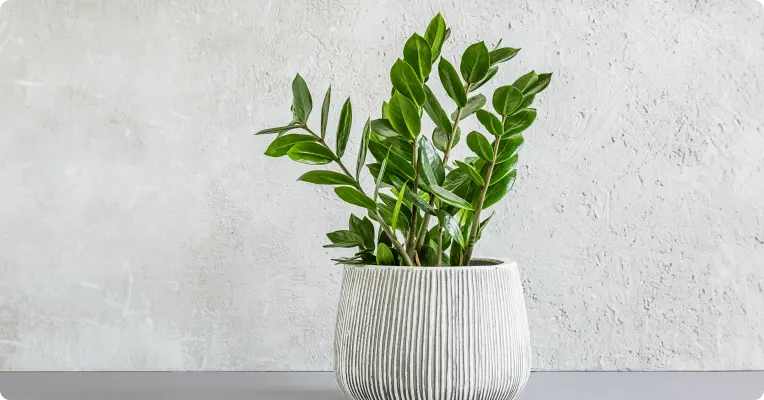
The ZZ plant has glossy, dark green foliage that suits modern commercial interiors. Its ability to tolerate lower light and periods between waterings makes it a practical option for offices with limited time for plant care.
Care requirements:
- Light: Tolerates low to moderate indirect light.
- Watering: Let the soil dry between waterings.
- Maintenance: Avoid waterlogged soil and check that the pot drains properly.
Best placement: Meeting rooms, side tables, and office corners with limited natural light.
Although the ZZ plant is relatively easy to maintain, it still needs suitable light to grow. It is also toxic if ingested.
3. Pothos (Epipremnum aureum)
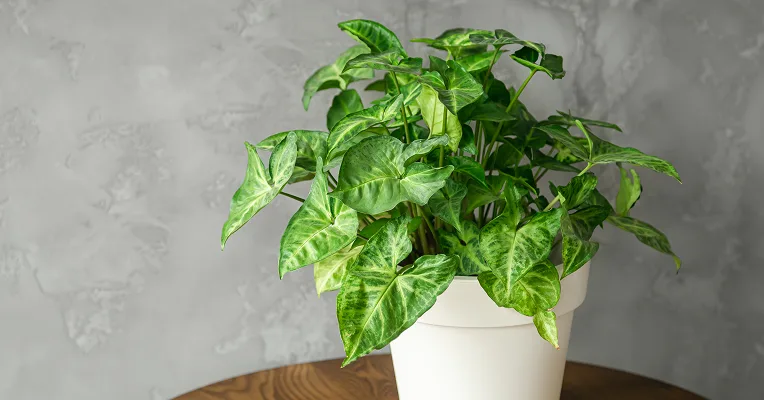
Pothos is a trailing plant that can add greenery to shelves, cabinets, and vertical spaces without occupying much floor area.
Care requirements:
- Light: Prefers moderate to bright indirect light but tolerates lower light.
- Watering: Water when the upper portion of the growing medium begins to dry.
- Maintenance: Trim long vines when necessary and inspect the leaves for pests.
Best placement: Office shelves, storage units, and designated planter stands.
4. Chinese Evergreen (Aglaonema)
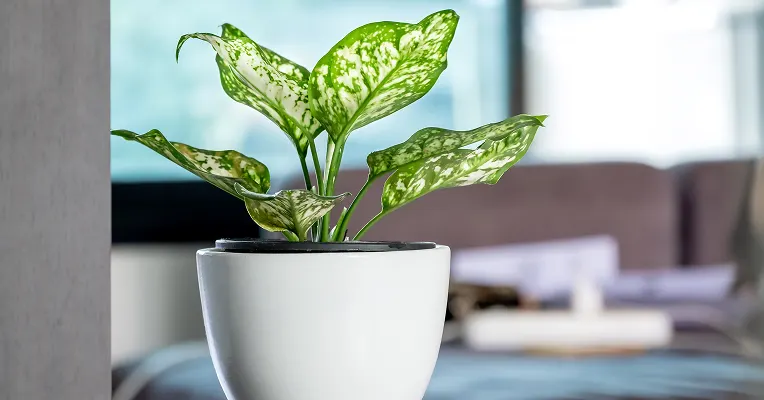
Chinese evergreen is a good choice for office landscaping because of its attractive foliage and manageable care requirements. Its green and patterned varieties can add colour to reception areas and shared workspaces.
Care requirements:
- Light: Many green varieties tolerate lower light, while some patterned varieties need brighter indirect light.
- Watering: Water when the upper layer of soil begins to dry.
- Maintenance: Protect the plant from cold drafts and avoid excessive watering.
Best placement: Reception desks, side tables, and shared office areas.
Choose the variety according to the lighting conditions in your office. Chinese evergreen plants are toxic if ingested, so consider this when selecting plants for shared environments.
5. Cast Iron Plant (Aspidistra elatior)
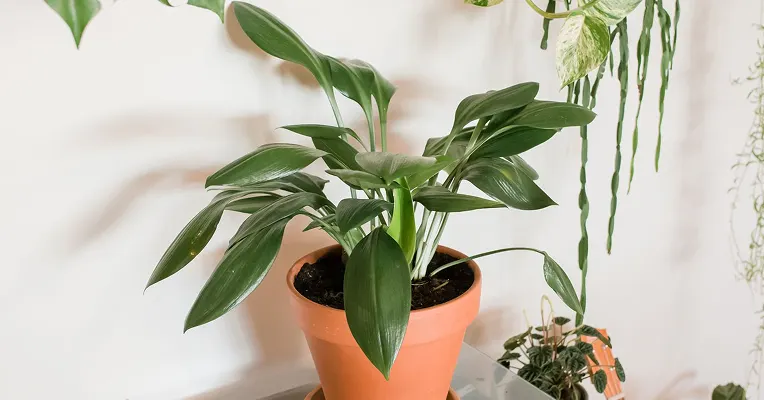
The cast iron plant tolerates low light and occasional lapses in watering. Its broad, dark green leaves provide a simple, neat appearance
Care requirements:
- Light: Tolerates low to moderate indirect light.
- Watering: Allow the upper soil to dry before watering again.
- Maintenance: Remove damaged leaves and avoid waterlogged soil.
Best placement: Interior corners, corridors with suitable ambient light, and offices away from bright windows.
This plant is particularly useful for areas where many flowering or high-light plants may struggle. However, it still needs some light to grow and should not be placed in complete darkness.
6. Areca Palm (Dypsis lutescens)
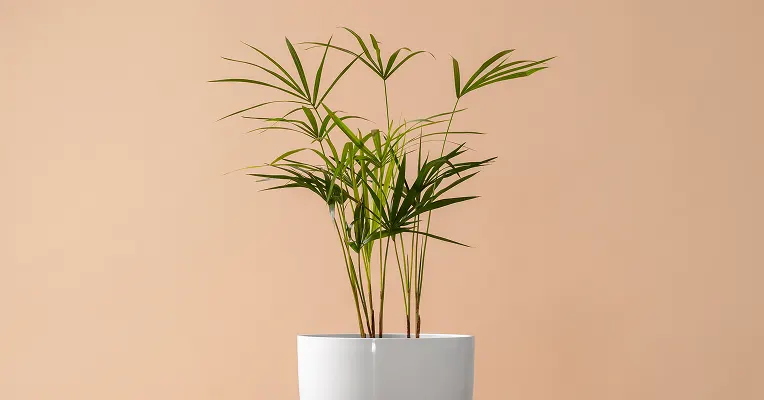
Areca palm adds height and soft, feathery foliage to commercial interiors. It is a suitable option for businesses that want a fuller green arrangement in reception areas or spacious office corners.
Care requirements:
- Light: Prefers bright, indirect light.
- Watering: Water when the upper layer of soil begins to dry, keeping the growing medium from becoming completely dry for extended periods.
- Maintenance: Remove dry fronds and monitor the soil moisture regularly.
Best placement: Reception areas, waiting lounges, and larger open-plan offices.
Areca palms need more room and attention than compact plants such as ZZ plants. Choose them for spaces with enough light and floor area to accommodate their spreading foliage.
7. Ixora (Ixora coccinea)
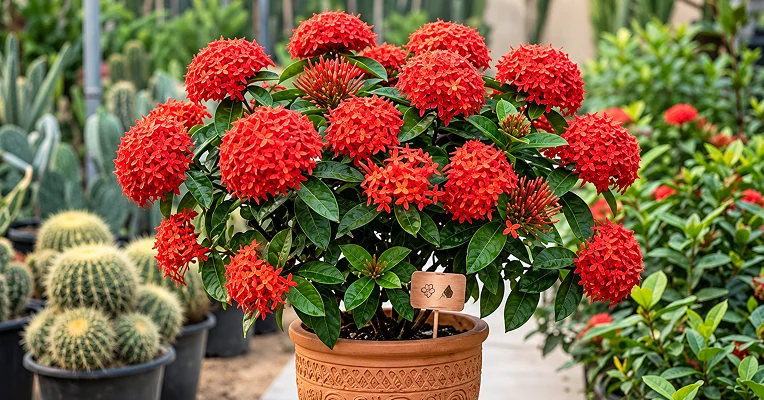
Ixora is a flowering shrub that adds colour to outdoor office spaces. Its clusters of red, orange, pink, or yellow flowers suit businesses looking to brighten entrances, courtyards, and landscaped areas.
Care requirements:
- Light: Prefers full sun to partial sun for healthy growth and flowering.
- Watering: Water regularly while the plant establishes, keeping the soil moist but well-drained.
- Maintenance: Prune lightly to maintain its shape and remove spent flowers or damaged growth when needed.
Best placement: Office entrances, outdoor planters, courtyards, and garden borders.
8. Parlor Palm (Chamaedorea elegans)
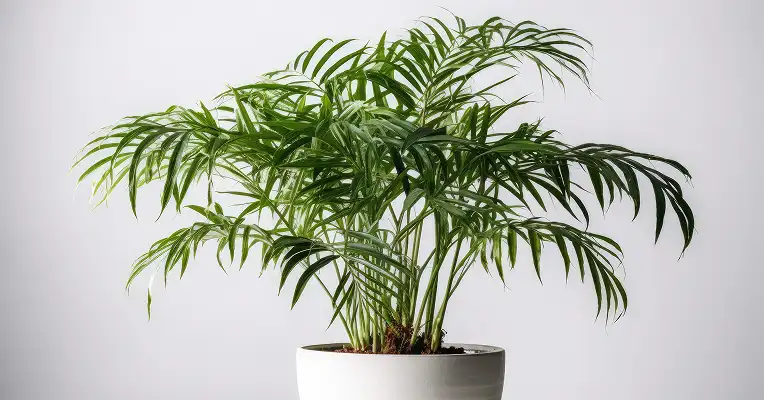
Parlor palms bring a softer, tropical appearance to commercial interiors. Their relatively compact growth makes them suitable for offices that need leafy greenery without the size of a large indoor palm.
Care requirements:
- Light: Prefers indirect light and tolerates lower-light conditions.
- Watering: Water when the upper soil begins to dry, avoiding prolonged dryness.
- Maintenance: Remove dry fronds and protect the plant from harsh direct sunlight.
Best placement: Waiting areas, meeting rooms, and sheltered office corners.
Compared with snake plants and ZZ plants, parlor palms may need more consistent attention to soil moisture. They are a useful option when a fuller, softer appearance is preferred.
9. Lady Palm (Rhapis excelsa)
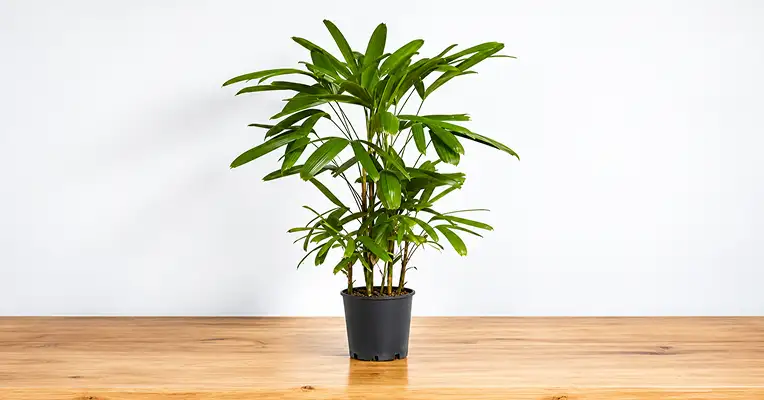
Lady palms have fan-shaped leaves and multiple upright stems, making them suitable for larger commercial interiors. They can provide a fuller appearance in spaces that need a substantial floor plant.
Care requirements:
- Light: Prefers indirect light and can adapt to moderate indoor conditions.
- Watering: Water when the upper layer of soil begins to dry.
- Maintenance: Remove damaged foliage and allow sufficient room for growth.
Best placement: Corporate lobbies, spacious corridors, and larger reception areas.
Lady palms work best when the planter and mature plant size are considered during the design stage. They are less suitable for narrow spaces where their foliage could obstruct movement.
10. Rubber Plant (Ficus elastica)

Care requirements:
- Light: Prefers bright indirect light.
- Watering: Allow the upper soil to dry before watering again.
- Maintenance: Wipe dusty leaves and prune when the plant becomes too large for its space.
Best placement: Window-side seating areas, open reception spaces, and well-lit corners.
Rubber plants need more suitable light than many low-light office plants. Their sap can irritate the skin, and the plant is toxic if ingested, so choose its location accordingly.
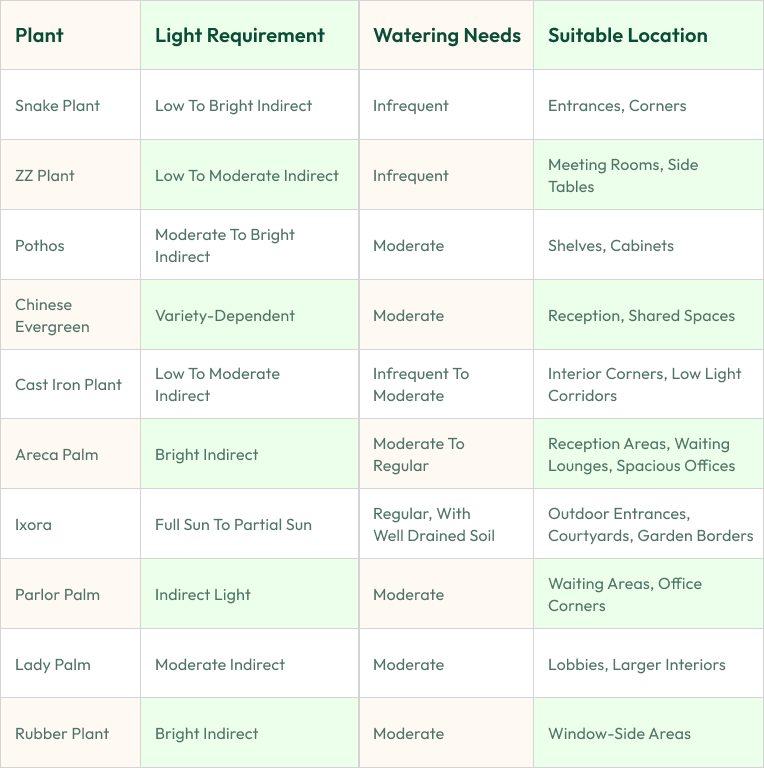
Quick Comparison of Low-Maintenance Office Plants
How to Choose Office Plants for Different Commercial Spaces
Reception and Entrance Areas
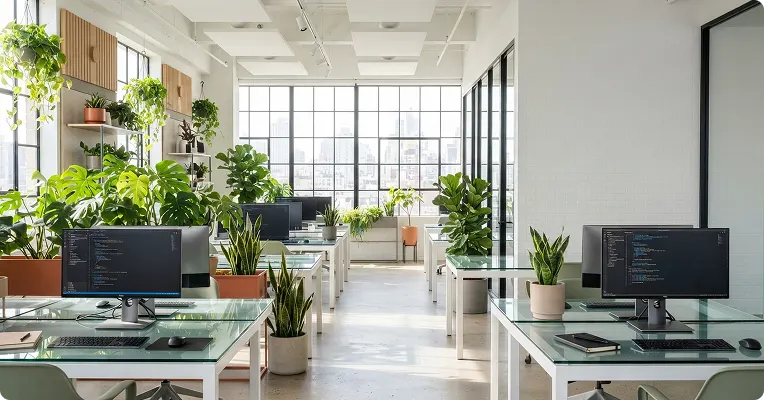
Snake plants and dracaenas for narrow corners; lady palms and rubber plants for larger, brighter spaces. Use planters that match the interior design and leave enough clearance around reception desks and entrances.
Workstations and Desks
Choose compact office plants that fit comfortably alongside computers and other equipment. Small pots of suitable foliage plants can add greenery without reducing usable desk space.
Avoid placing plants where water could spill onto electronics or where trailing stems might interfere with cables. Check lighting before selecting a variety for an interior workstation.
Meeting Rooms and Conference Rooms
Meeting rooms benefit from plants that have a neat growth habit and do not need frequent attention. ZZ plants and Chinese evergreens may suit these spaces when the light conditions are appropriate.
Corridors, Corners, and Shared Spaces
Before installation, check the available light and the mature size of each plant. A suitable floor planter in a spacious corner is generally more practical than placing several small pots along a busy passage.
How to Maintain Office Plants with Minimal Effort
A simple maintenance routine can help businesses keep their office plants healthy without assigning too much time to plant care. The key is to choose suitable varieties and adjust the routine to their growing conditions.
Set a Watering Routine Based on Plant Needs
Use containers with drainage holes and remove excess water from decorative outer pots. Overwatering can damage roots even when the plant appears healthy on the surface.
Check Lighting and Air-Conditioning Conditions
Keep plants suited to the available light and avoid placing sensitive varieties directly in the path of air-conditioning vents. If an office has very little natural light, consider suitable grow lights rather than relying on ordinary ceiling lights alone.
Clean Leaves and Remove Damaged Growth
Dust can accumulate on indoor foliage, particularly in offices with frequent foot traffic or limited ventilation. Wipe leaves gently with a damp cloth when needed and remove dead or damaged foliage.
Check for pests during routine inspections. Addressing problems early can help prevent them from spreading to other plants.
Assign Responsibility for Plant Care
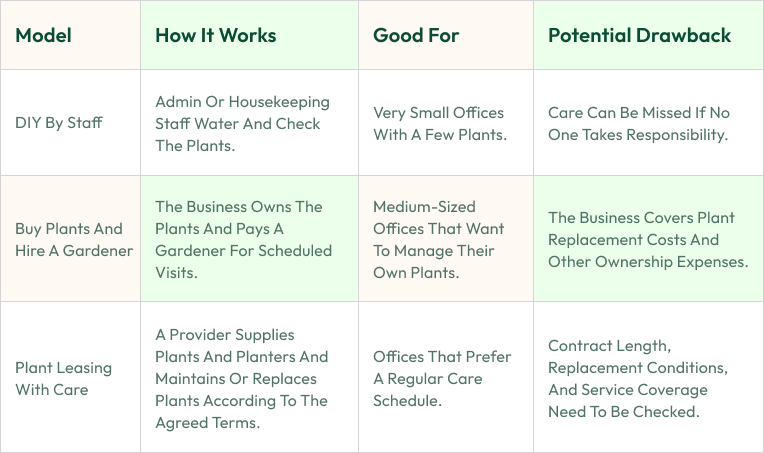
Who Manages Office Plant Maintenance? Three Models Compared
Businesses can manage office plants themselves, hire a gardener, or choose a plant leasing service that includes ongoing care. The right option depends on the number of plants, available staff time, and the level of support required.
How Floret can help
Floret offers indoor and outdoor plant leasing with planters and a scheduled care routine. The service also includes plant replacement under the applicable terms. Businesses can enquire about the available plans and confirm the maintenance schedule, contract length, and replacement conditions before signing up.
What Does Office Landscaping and Plant Maintenance Cost in India?
The cost of maintaining office plants depends on the size of the workspace, the number of plants, planter quality, visit frequency, and the level of care required. Indoor and outdoor installations may also need different maintenance arrangements.
Businesses should compare the scope of service alongside the price. A plan with regular visits may suit an office with many plants, while a smaller workspace may need less frequent care.
Floret Gardening and Plant Care Plans

Common Office Landscaping Mistakes to Avoid
- Choosing plants for appearance alone: Check lighting and watering requirements before purchasing.
- Overwatering: Check soil moisture instead of following a rigid schedule.
- Placing plants near cold air vents: Some plants may develop damaged foliage when exposed to unsuitable temperatures or direct airflow.
- Using unsuitable planters: Ensure that containers provide adequate drainage and root space.
- Overcrowding the office: Keep plants clear of walkways, workstations, emergency exits, and equipment.
- Neglecting routine maintenance: Inspect foliage and soil regularly to identify problems early.
Matching plants to the actual conditions of the office is usually more effective than choosing varieties based on appearance alone.
Plan an Office Landscape That Works for Your Business
Successful office landscaping begins with choosing plants that suit the workspace conditions and the time available for their care. Snake plants, ZZ plants, pothos, and other suitable varieties can help businesses in Pune and Mumbai introduce greenery without creating a demanding maintenance routine.
Consider the lighting, planter size, drainage, and placement of each plant before installation. For businesses that want a consistently maintained result without managing it internally, professional plant leasing and maintenance services remove the guesswork.
Explore Floret’s plant and landscaping solutions to find suitable greenery, planters, and care options for your workplace in Pune or Mumbai.
Explore Floret India's plant and landscaping solutions to find suitable greenery, planters, and care options for your workplace.
Frequently Asked Questions
What are the best low-maintenance plants for offices?
How much does office landscaping cost in India?
Which plants are suitable for offices with low natural light?
How can businesses maintain office plants with minimal effort?
Does Floret offer office plant leasing and maintenance?
Let’s Grow Something Beautiful Together
Get in touch with us for customized plant solutions and expert care.