
How to Maintain a Garden at Home: The Complete Year-Round Guide
- Floret Team
- July 9, 2026
 12 minutes
A plant bought with excitement in January often looks distressed by July. Not because the owner stopped caring, but because the rules changed and nobody explained the new ones. This is the pattern behind almost every struggling home garden in India.
If you want to know how to maintain a garden at home, the short answer is this: it means regularly caring for plants, soil and garden spaces so they stay healthy and productive year-round. In India, that care has to shift across three seasons: summer, monsoon and winter, each with its own demands.
Sporadic attention is not the same as consistent maintenance. A garden watered enthusiastically for two weeks and then ignored will always struggle. A well-kept garden lifts air quality and property appeal; a neglected one only creates more work the longer it sits. This guide covers a seasonal maintenance framework, a master checklist, and when it makes sense to bring in a professional.
Table Of Content
- The Five Foundations of How to Maintain Garden at Home
- Fertilization: Feeding Your Garden on a Schedule, Not When You Remember
- The Complete Year-Round Garden Maintenance Checklist
- What You Can Maintain Yourself vs When a Professional Makes a Difference
- The Seven Garden Maintenance Mistakes Most Home Gardeners Make
- Conclusion: A Healthy Garden Needs a Routine, Not Occasional Effort
- Frequently Asked Question
Keep your plants green with trusted gardening services.
A plant bought with excitement in January often looks distressed by July. Not because the owner stopped caring, but because the rules changed and nobody explained the new ones. This is the pattern behind almost every struggling home garden in India.
If you want to know how to maintain a garden at home, the short answer is this: it means regularly caring for plants, soil and garden spaces so they stay healthy and productive year-round. In India, that care has to shift across three seasons: summer, monsoon and winter, each with its own demands.
Sporadic attention is not the same as consistent maintenance. A garden watered enthusiastically for two weeks and then ignored will always struggle. A well-kept garden lifts air quality and property appeal; a neglected one only creates more work the longer it sits. This guide covers a seasonal maintenance framework, a master checklist, and when it makes sense to bring in a professional.
The Five Foundations of How to Maintain Garden at Home
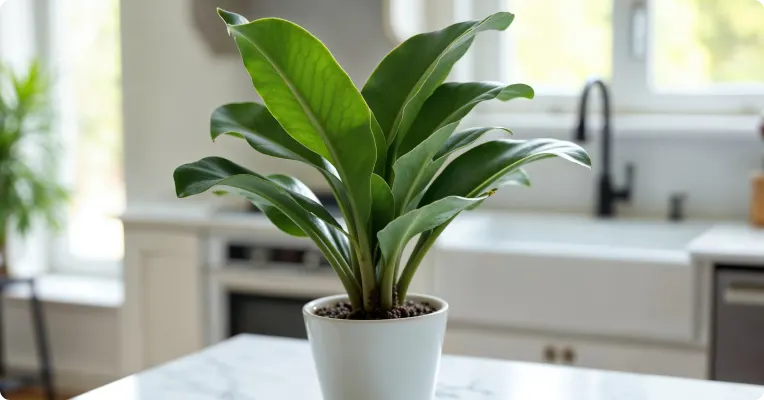
Before the seasonal detail, here are the five things every home garden needs, regardless of the month. Get this right, and how to maintain garden at home becomes far easier to apply.
Soil Health: The Part Most Home Gardeners Overlook First
Healthy soil is the foundation every plant grows from, and it is usually the first thing people skip. Pune and much of western India lean toward laterite or clay-heavy soil that compacts easily and drains poorly after monsoon, setting up root rot before you notice a problem.
- Pot gardens: refresh the top 2 to 3 inches of potting mix every 6 to 12 months; do a full replacement every 2 years.
- In-ground gardens: work in compost before summer and after monsoon to restore nutrients.
- Avoid chemical fertilizer in freshly disturbed soil; it can burn roots. Let compost settle 2 weeks before planting.
ICAR (Indian Council of Agricultural Research) publishes soil health guidance for home gardens in tropical and semi-arid climates, a useful reference for your specific plot.
Watering: The Task Done Most Often and Most Incorrectly
If one habit decides how to maintain garden at home successfully, it is watering. Timing, depth and frequency matter more than most people assume.
Timing: water 6 to 8 AM in summer. Midday watering scorches leaves; evening watering in monsoon invites fungal problems.
Depth: water until it runs from the pot’s bottom. Surface-only watering keeps roots shallow and unable to survive summer.
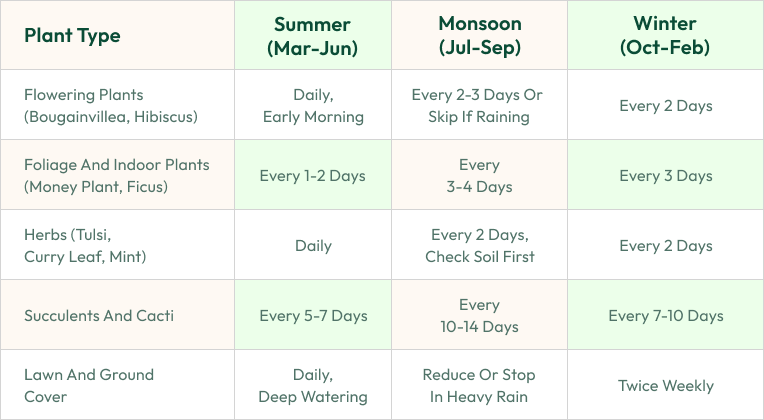
Frequency: varies by season and plant type. Use the schedule below.
Fertilization: Feeding Your Garden on a Schedule, Not When You Remember
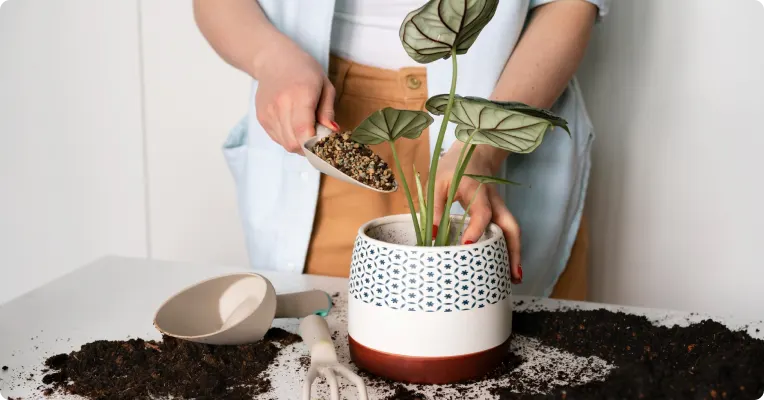
Over-fertilizing damages a plant as much as under-fertilizing. Most home gardeners over-feed in summer, then stop entirely once monsoon starts, which is close to backwards for how to maintain garden at home correctly.
- Summer: balanced NPK or compost every 4 weeks. Skip solid manure in May-June; decomposition heat can burn roots.
- Monsoon: cut back significantly. If feeding at all, use slow-release organic fertilizer every 6 to 8 weeks.
- Winter: resume every 4 weeks, the main growing season for most Indian garden plants.
- Seaweed extract works faster than granular feed. Skip chemical fertilizers around children or pets.
Pruning and Trimming: Growth Control and Plant Health
Pruning shapes growth and removes dead, diseased or crossing branches before they damage the rest of the plant.
- When: after flowering for flowering plants, before monsoon for overgrown shrubs, after monsoon for storm damage.
- Deadhead spent blooms from Bougainvillea, Hibiscus and Mogra to keep new flowers coming.
- Never remove more than one third of a plant at once; heavy summer pruning can cause dieback.
- Use clean, sharp tools; blunt blades tear stems and invite infection.
Pest and Disease Management: Catch Problems Before They Spread
Inspect plants weekly in monsoon and every two weeks otherwise. Check the underside of leaves first; that is where most infestations start.
- Common pests: aphids, mealybugs, scale insects, whiteflies, and spider mites in summer heat.
- First response: isolate the plant and try neem oil spray: 5 ml neem oil, 1 ml liquid soap, 1 litre water, before chemical pesticides.
- Common diseases: powdery mildew and black spot (fungal, monsoon-heavy); root rot from overwatering or poor drainage.
- Prevention: good airflow, avoid wetting foliage, clear fallen leaves, do not crowd pots.
If weekly inspection feels like one task too many, Floret Gardener’s plant care services cover this as part of a routine visit.
The Year-Round Seasonal Garden Maintenance Guide for Indian Homes
Summer Garden Maintenance (March to June): Protecting Plants From the Heat
- Water daily, early morning, 6 to 8 AM. Never water at midday.
- Mulch with dry leaves, coco peat or wood chips to cut evaporation and keep roots cool.
- Move shade-sensitive pots to indirect light; use shade nets above 38 to 40 degrees Celsius.
- Hold off on repotting; transplant shock plus heat stress is often fatal. Wait for monsoon or October.
- Skip solid manure in May-June; use liquid fertilizer diluted to half strength if needed.
- Check drainage holes monthly; blocked holes overheat and sour soil quickly.
- Terracotta pots outperform plastic in summer through evaporative cooling.
Monsoon Garden Maintenance (July to September): The Season Most Gardens Get Wrong
Monsoon is when most people learning how to maintain garden at home lose plants, usually from overwatering rather than the rain itself.
- Cut back watering the moment monsoon begins. Overwatering in humidity is the top cause of plant death this season.
- Check drainage everywhere. Standing water for over 30 minutes after rain signals a problem.
- Watch for powdery mildew, leaf spot and stem rot. Improve airflow; never compost diseased material.
- Prune overgrown shrubs before the end of June; dense growth breeds pests and fungus in humidity.
- Suspend heavy fertilization, nutrients wash away, and excess nitrogen attracts pests.
- Do not spray neem oil or pesticides while raining; treat on dry days instead.
- This is actually the best season to add new plants; soil moisture is good, and temperatures are lower.
If sourcing and placing new plants is not something you want to manage, Floret Gardener’s plant leasing and care option handles it end to end.
Winter Garden Maintenance (October to February): The Best Growing Season
Winter is peak growing and flowering season in Pune and Mumbai, the forgiving stretch where effort pays off visibly.
- Resume fertilizing every 3 to 4 weeks; flowering species bloom, and foliage plants push fresh growth.
- Cut back watering compared to summer, but do not stop; cooler soil just dries more slowly.
- Ideal window for repotting, dividing and restructuring; plants recover fast with no monsoon rain to disturb them.
- Good winter flowers for Pune and Mumbai: Marigold, Petunia, Salvia, Alyssum and Cosmos.
- Clean and service tools at the start of winter, sharpen pruners, oil handles, check hoses.
- For housing societies, winter is the natural window for redesign and new planting before summer heat returns.
Floret Gardener’s society garden maintenance plans are built around exactly this window.
The Complete Year-Round Garden Maintenance Checklist
A routine only works if it is easy to follow. This breaks down how to maintain garden at home into weekly, monthly and seasonal tasks.
Weekly Tasks: What Your Garden Needs Every Seven Days
- Water per the seasonal schedule: daily in summer, reduced in monsoon, moderate in winter.
- Check leaf undersides for early pest activity.
- Deadhead spent flowers; clear fallen leaves and debris.
- Confirm drainage holes are clear and flowing freely.
Monthly Tasks: Maintenance That Protects Long-Term Health
- Apply fertilizer on the seasonal schedule.
- Check soil moisture 2 inches down before watering deeply.
- Weed beds and pot surfaces; light pruning of crossing or dead growth.
- Wipe dust from indoor plant leaves; check pots for root binding.
Seasonal Tasks: Bigger Interventions That Set Up the Next Three Months
- Before summer (Feb-Mar): mulch, check shade, clear drainage, repot if needed, full pest inspection.
- Before monsoon (June): prune, clear drainage paths, raise pots on risers, prepare neem oil spray.
- After monsoon (October): remove fungal debris, repot and restructure, resume feeding, plan winter planting.
- Mid-winter (Dec-Jan): plant seasonal flowers, deep soil amendment, service tools.
What You Can Maintain Yourself vs When a Professional Makes a Difference

Tasks Any Home Gardener Can Do Confidently with Basic Tools
- Daily and weekly watering, once you know the seasonal schedule.
- Deadheading and light pruning as you notice spent or dead growth.
- Regular fertilization with packaged organic products, per package directions.
- Pest first response with an early neem oil spray.
- Clearing debris and weeding on a weekly habit.
Where a Trained Gardener Delivers Results DIY Cannot Easily Replicate
Not every part of how to maintain garden at home is a fair fight for a first-time gardener.
- Structural pruning of large shrubs and trees: incorrect technique permanently damages plant structure.
- Soil diagnosis: reading symptoms like yellowing leaves back to the specific cause takes experience.
- Identifying severe or unfamiliar pests and diseases; misdiagnosis wastes time and can damage plants further.
- Garden redesign and layout: correct spacing depends on knowing mature plant size and habit.
- Consistent care for larger gardens and societies, over 10 to 15 pots or 200 sq ft, a fixed schedule outperforms occasional DIY attention.

We provide trained, supervised gardeners with a fixed scope of work and one point of contact for all garden maintenance

The Seven Garden Maintenance Mistakes Most Home Gardeners Make
Overwatering: The Most Common Reason Healthy Plants Die
If you fix only one habit while learning how to maintain garden at home, make it this one. The test: push a finger 2 inches into the soil. Damp, skip watering. Dry, water deeply until it drains. Yellow leaves with soft stems mean overwatering; yellow leaves with dry, crisp soil mean underwatering.
Ignoring Drainage Until It Is Too Late
Blocked drainage holes cause root rot within days in monsoon. Check monthly, clear holes with a thin stick, and raise pots on risers.
Fertilizing During Heat or Rain Extremes
Solid manure in peak summer heat generates decomposition heat that burns roots. Fertilizing before or during heavy rain simply washes nutrients away.
Pruning Too Much or at the Wrong Time
Never remove more than one third of a plant at once, and avoid heavy pruning above 35 degrees Celsius.
Using the Same Soil for Years Without Amendment
Old potting soil compacts and depletes within 12 to 18 months. Refresh the top layer annually; replace fully every 2 years.
Placing Shade Plants in Direct Sun and Vice Versa
The most common mistake with new plants: putting a shade-loving Peace Lily, Pothos or Snake Plant into direct afternoon sun. Always check a plant's light needs at purchase.
Waiting Until a Problem Is Visible Before Acting
By the time an infestation is obvious, it has usually been developing for 2 to 3 weeks. Weekly inspection catches problems while a simple neem oil spray is still enough.
Conclusion: A Healthy Garden Needs a Routine, Not Occasional Effort
A garden maintained consistently on a simple routine will always outperform one that gets intensive but sporadic attention. India’s three seasons each ask something different of your plants, and homeowners who adjust accordingly keep their gardens thriving year-round.
Start with the weekly and monthly checklist here. Get the seasonal transitions right, especially into and out of monsoon, and most common problems simply will not occur. That is the whole answer to how to maintain a garden at home: consistency across the right tasks at the right time.
For homeowners who would rather a professional handle the routine, that is exactly what Floret Gardener is built for, covering homes, societies, offices and terraces across Pune and Mumbai.
Schedule a maintenance assessment.
Frequently Asked Questions
How to maintain garden at home?
How often should I water my plants in Pune or Mumbai?
How do I maintain my garden during monsoon?
What are the most common home garden mistakes in India?
When should I hire a professional gardener?
How do I improve soil quality in my home garden?
Let’s Grow Something Beautiful Together
Get in touch with us for customized plant solutions and expert care.