
How to Set Up a Terrace Garden: A Complete Beginner's Guide
- Floret Team
- August 22, 2026
 9 minutes
Table Of Content
- Step 1 - Check If Your Terrace Is Ready
- Step 2 - Assess Sunlight and Plan Your Layout
- Step 3 - Choose Your Containers
- Step 4 - Mix Your Potting Soil
- Step 5 - Pick Beginner-Friendly Plants
- Step 6 - Set Up Watering and Daily Care
- What a Terrace Garden Costs in India (3 Budget Tiers)
- How Can You Save Money on Your Terrace Garden Later?
- Advanced Upgrade - Shade Nets and Structures
- Common Mistakes Beginners Make
- Conclusion
- Frequently Asked Questions
Keep your plants green with trusted gardening services.
An empty terrace is one of the most underused spaces in an Indian home and setting up a terrace garden here can start for as little as Rs. 500. Whether you want fresh herbs, leafy greens, flowering plants, or a small kitchen garden, you can transform your rooftop without investing in a complicated setup.
The key is to start small and get the basics right. In this guide, you’ll learn how to check whether your terrace is ready, assess sunlight, choose containers, prepare the right soil mix, select beginner-friendly plants, and set up watering and daily care. We’ll also break down the terrace garden cost in India, common beginner mistakes, and optional upgrades such as shade nets.
Step 1 - Check If Your Terrace Is Ready
Before buying pots or seeds, make sure your terrace can safely support the garden you have in mind.
Check the structural load:
Most container-based terrace gardens use pots or grow bags distributed across the floor rather than placing a large amount of soil in one concentrated area. Distributed weight is generally preferable to a single heavy load. If you plan a large rooftop farm, permanent beds, or extensive soil coverage, consult a qualified structural professional before proceeding.
Check waterproofing:
A container garden is much less demanding than a lawn-style terrace covered with soil. If you plan to create a soil-covered garden, proper waterproofing should be addressed first. This can be one of the biggest cost and risk differences between a simple container garden and a full rooftop landscape.
Check drainage:
Every container should have adequate drainage holes. Place trays or plates beneath pots where appropriate to help prevent water from collecting directly on the terrace surface and reduce the risk of seepage.
Step 2 - Assess Sunlight and Plan Your Layout
Step 3 - Choose Your Containers
You don’t need expensive planters to start a terrace garden.
Free route:
Reuse clean buckets, paint cans, tubs, or crates. Make adequate drainage holes at the bottom and use a small piece of broken pot or similar material to prevent the drainage opening from becoming blocked by soil.
Purchased route:
Fabric grow bags are lightweight, portable, and well suited to rooftop gardening. A 5L-20L grow bag can typically cost around Rs. 50-150, depending on size and quality.
The right container depends on the plant. Small herbs can grow in compact containers, while tomatoes, brinjal, and other larger vegetables need more growing space. Explore the range of pots and planters of Floret and find the right one for your garden.
Step 4 - Mix Your Potting Soil
The standard terrace garden potting mix is equal parts garden soil, compost (or vermicompost), and cocopeat.
This simple combination balances nutrition, drainage, and water retention, giving container plants a better growing medium than plain garden soil alone.
Mix the ingredients thoroughly before filling your containers. Avoid packing the mix down too tightly because roots need both moisture and air around them.
Floret has nutrients your garden need, from cocopeat and frtiliser to garden tools order and get it delivered to your doorstep.
Step 5 - Pick Beginner-Friendly Plants
If you’re wondering about the best plants for terrace garden setups, start with varieties that are relatively easy to grow and useful in an everyday Indian kitchen.
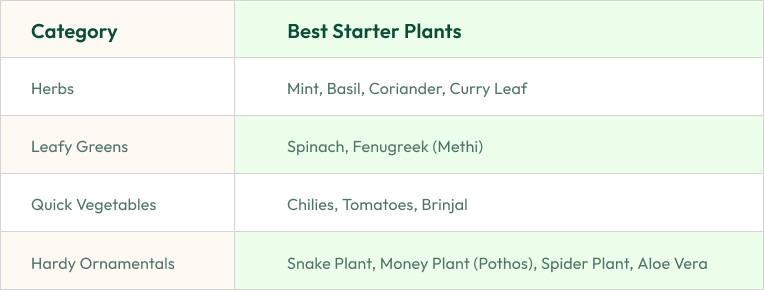
Start with a few varieties rather than trying to grow everything at once. Herbs and leafy
greens are particularly useful for beginners because they can provide relatively quick
results and don’t require the same amount of space as larger vegetables.
Step 6 - Set Up Watering and Daily Care
Container plants generally need watering every 1-2 days, although they may need daily watering during peak summer. During cooler months or the monsoon, watering frequency may be lower.
Don’t water automatically just because it’s a particular day. Check the moisture of the soil first. If the top layer feels dry, water thoroughly until some water drains from the bottom of the container.
A small terrace garden can usually be managed in around 15-30 minutes a day once it is established. Use this time to check soil moisture, remove dead leaves, inspect plants for pests, and harvest vegetables or herbs.
What a Terrace Garden Costs in India (3 Budget Tiers)
The terrace garden cost depends mainly on the number of containers, type of growing medium, irrigation system, and whether you add structures such as trellises or shade nets.
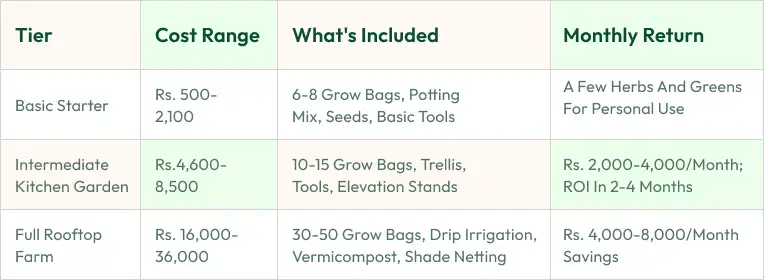
These figures are indicative and can vary based on local prices, materials, plant selection, and the scale of the garden. Treat the estimated monthly return as a potential household saving rather than guaranteed income.
How Can You Save Money on Your Terrace Garden Later?
The initial setup doesn’t have to be the biggest expense. Once your terrace garden is established, a few simple habits can significantly reduce recurring costs.
Save your seeds:
Collect seeds from suitable mature plants and use them for your next growing cycle instead of buying new packets every time.
Make your own compost:
Composting suitable kitchen and garden waste can reduce how much compost or organic fertilizer you need to purchase.
Propagate from cuttings:
Many plants can be multiplied from healthy cuttings, allowing you to expand your garden without buying a new plant for every container.
Reuse containers:
Don’t discard suitable buckets, tubs, crates, or old pots. With proper cleaning and drainage, many can be repurposed as planters.
Grow what you actually use:
Prioritize herbs, leafy greens, and vegetables that your household regularly consumes. This makes your garden more useful and can increase the practical savings from home-grown produce.
Share with other gardeners:
Exchange seeds, cuttings, composting tips, and surplus plants with neighbours or friends. A small gardening community can help everyone spend less.
The goal is to create a productive garden that becomes increasingly self-sustaining over time.
Advanced Upgrade - Shade Nets and Structures
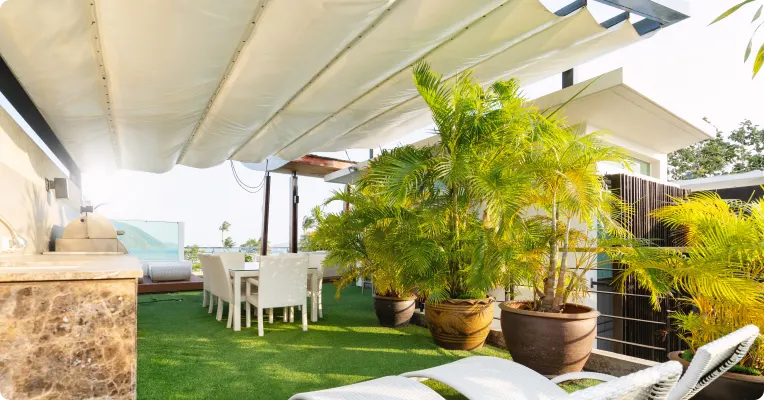
Once your basic terrace garden is working well, you can consider adding a shade-net structure to protect plants from intense sunlight, depending on your climate and crop requirements.
Indicative structure costs can be around:
- Flat structure: approximately Rs. 35/sq ft
- A-type structure: approximately Rs. 45/sq ft
- Arch-type structure: approximately Rs. 55/sq ft
Installations may have a minimum area requirement of around 150 sq ft. Actual prices vary by material, location, structure design, installation requirements, and supplier.
A shade structure should be treated as an upgrade rather than a requirement for a beginner container garden.
Common Mistakes Beginners Make
A few avoidable mistakes can turn an enjoyable gardening project into unnecessary work.
Skipping the waterproofing check:
Don’t assume every terrace is ready for a large soil-covered garden.
Overwatering:
More water does not necessarily mean healthier plants. Check the soil before watering.
Starting too big:
Begin with a manageable number of containers and expand as you learn what works.
Using the wrong soil:
Plain garden soil can become compacted in containers. A balanced mix of soil, compost, and cocopeat is more suitable.
Ignoring drainage:
Poor drainage can cause waterlogging and damage plants. Make sure containers have drainage holes and manage excess water carefully.
Want to set up a huge garden on yourterrace? We have gardeners to help you.
Conclusion
A terrace garden doesn’t require a huge budget or years of gardening experience. Start with a few containers, choose plants suited to your sunlight and climate, use a balanced potting mix, and establish a simple watering routine. Once those basics work, you can gradually add more plants, trellises, irrigation, or shade structures. The best approach is simple: start small, learn what works on your terrace, and scale up from there.
Frequently Asked Questions
How much does a terrace garden cost in India?
A basic starter setup can cost around Rs. 500-2,100. A fuller kitchen garden may cost Rs.4,600-8,500, while a larger rooftop farm can cost Rs. 16,000-36,000 or more. Actual costs depend on container size, materials, plants, irrigation, and local prices.
Do I need to waterproof my terrace?
Not necessarily for a simple container-based setup, provided water is managed properly
and the existing terrace is in good condition. Waterproofing becomes particularly important when creating a lawn-style or soil-covered garden. Check the terrace condition before adding substantial soil or permanent structures.
Can I set up a terrace garden in a rented apartment?
Yes. A rented home is well suited to a portable terrace garden. Use pots and grow bags that can be moved when required, and avoid permanent structures or modifications unless you have the landlord’s permission. Start with herbs, greens, and compact vegetables that are easy to relocate.
What is the best soil mix for a terrace garden?
Equal parts garden soil, compost, and cocopeat make a simple starting mix for many container plants. Garden soil provides structure, compost contributes organic matter and nutrients, while cocopeat helps with moisture retention and aeration. Adjust the mix according to the specific plants and local growing conditions.
How much time does terrace garden maintenance take?
A small, established terrace garden can take around 15-30 minutes a day for routine care. This includes checking soil moisture, watering when required, removing damaged leaves, inspecting plants for pests, and harvesting. The time needed will increase as the number of containers and complexity of the garden increase.
Let’s Grow Something Beautiful Together
Get in touch with us for customized plant solutions and expert care.